


Powerhouse your life
From Burnout to Breakthrough Badass: Resuscitate Your Biology. Rewire Your Mind. Redefine Your Leadership.
Meet the Author
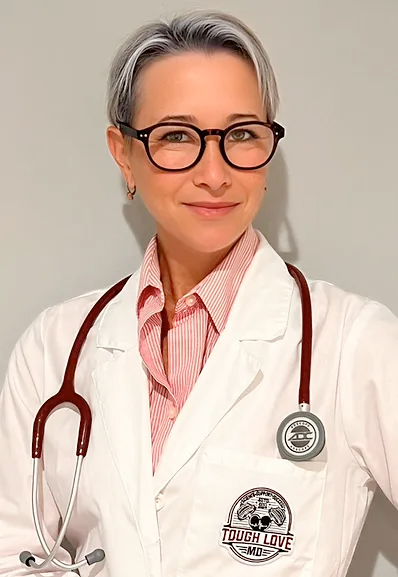
Amy Gutman MD, FACEP
Amy Gutman is an award‑winning emergency physician, executive strategist, and internationally recognized keynote speaker whose work bridges the worlds of frontline medicine and high‑stakes leadership. For over three decades, she has served on the front lines of human crisis, from prehospital rescue missions to the chaos of urban trauma bays, now translating lessons from life-and-death moments into actionable strategies for resilience, metabolic health, and leadership performance.
A highly sought‑after voice on international stages, Dr. Gutman has delivered keynotes and workshops for executives, clinicians, and organizations seeking to transform burnout into breakthrough. Her unique perspective fuses cellular science with lived experience: not only has she led teams through resuscitations and disasters, but she also continues to work night shifts in emergency departments, staying grounded in the realities faced by patients and healthcare professionals alike.
Choose Your Preference



About the book
What if you could lead your life and your leadership the way an ER physician runs a resuscitation: calm in chaos, decisive under pressure, and unshakably resilient? In Powerhouse Living: Lead Your Life Like A Resuscitation, internationally recognized speaker and award‑winning emergency physician Dr. Amy Gutman draws on decades of frontline experience, from prehospital rescue to high‑stakes trauma bays around the world, to share actionable lessons pulled straight from real cases in the emergency department.
This isn’t another fluffy wellness or motivational book. It’s a science‑backed strategy guide to mastering your biology, sharpening your mind, and transforming burnout into breakthrough. By applying the principles of cellular science, you’ll reclaim your energy, lead with clarity, and create a life that refuses to stagnate; because to thrive, the first pulse you must take is your own
Download the Ebook & Start Powerhousing Your Life
- Powerhouse Your Life and Leadership — Order the Book Transform burnout into breakthrough with ER‑tested strategies and actionable lessons from real cases. Master your biology, sharpen your focus, and lead your life like a resuscitation.
- Powerhouse Your Organization — Book Dr. Gutman for Keynotes & Events Bring the Leadership Vital Signs framework to your team. Resilience, metabolic mastery, and high‑impact leadership strategies that turn organizational burnout into breakthrough performance.


Awards and Achievements
- Board Certified Emergency Medicine Physician
- TEDx speaker.
- Multiple research journal and online healthcare thought leader articles in emergency medicine, healthcare, and business journals
- International Keynote Speaker
- Award winner in Leadership and Healthcare including: the Healthcare Innovator Award, CXO Leadership Innovator Award, EMS Physician of the Year, LSU EMS Service Award, Fire Department Service Award, Cardiac Arrest Research Award, Lifesaver Award
Dr. amy gutman
Leadership & Resiliency Speaker well‑being & Metabolic Medicine Expert
Seeking a distinctive speaker who delivers clarity and peak performance, grounded in real-world medicine and metabolic expertise?
Keynotes and seminars bring evidence-based strategies to fire up teams, sharpen leadership, and transform burnout into breakthroughs.
Meet Dr. Amy Gutman, a board-certified emergency physician, author, and CEO of ToughLoveMD, with over 30 years of clinical and executive leadership experience.
Imagine your team:
- Mastering resilience with proven, evidence-based scientific strategies
- Thriving mentally and physically with science-backed insights
- Transforming into Powerhouse leaders
Dr. Gutman’s expertise in emergency medicine and health optimization empowers teams to overcome challenges and achieve sustainable success.
Book Dr. Amy Gutman today to elevate your team’s performance or ignite your corporate event.

Testimonials
Chief Kingston Fire and EMS Department
She had hundreds of people standing on their feet. Amazing speaker
Christopher Hyatt She had hundreds of people standing on their feet. Amazing speaker
OLCIAS International Conference Manager
Your insights on neuroplasticity were invaluable, and it was a pleasure to have you as a speaker. I look forward to the opportunity to work with you again in the future
Gazal Saini Your insights on neuroplasticity were invaluable, and it was a pleasure to have you as a speaker. I look forward to the opportunity to work with you again in the future
Judson Marketing Group
Working with Dr. Amy Gutman has been an absolute privilege. Her brilliance lies not only in her deep clinical expertise but also in her fearless ability to communicate hard truths with empathy, clarity, and purpose. Whether she’s advising patients or educating audiences, Dr. Gutman brings unmatched insight and integrity to everything she does.
Brent Dutka Working with Dr. Amy Gutman has been an absolute privilege. Her brilliance lies not only in her deep clinical expertise but also in her fearless ability to communicate hard truths with empathy, clarity, and purpose. Whether she’s advising patients or educating audiences, Dr. Gutman brings unmatched insight and integrity to everything she does.
Host: My Future Business Podcast
Amy is a natural speaker who shares her story elegantly with the audience. I thoroughly enjoyed interviewing Amy, and I look forward to the opportunity to talk about her upcoming book. If you're a host...book her as fast as you can
Rick Nueske Amy is a natural speaker who shares her story elegantly with the audience. I thoroughly enjoyed interviewing Amy, and I look forward to the opportunity to talk about her upcoming book. If you're a host...book her as fast as you can
Director WCMC Hudson Valley Conferences
Dr. G freaking rocks! She is the motivational speaker you didn't know existed and now can't live without!
Charles Mitzel Dr. G freaking rocks! She is the motivational speaker you didn't know existed and now can't live without!
EMS World
Manager World Obesity Conference
Her presence made a significant impact on the success of the event. Her dedication...along with her invaluable expertise, is highly esteemed. We were truly honored to have her join us as a Speaker and she played a pivotal role in the overall success of WOC 2024.
Sharon Carter Her presence made a significant impact on the success of the event. Her dedication...along with her invaluable expertise, is highly esteemed. We were truly honored to have her join us as a Speaker and she played a pivotal role in the overall success of WOC 2024.
Managers/Conference Attendees
Awesome presentation...she was great!” "Her Enthusiasm is inspiring...fantastic instructor in applying critical thinking skills
John Mckinney Awesome presentation...she was great!” "Her Enthusiasm is inspiring...fantastic instructor in applying critical thinking skills
Award Winning Podcast Host
Imagine blending the adrenaline of saving lives, the strategic mindset of a CEO, and the charisma of a speaker
Matthew Gray Imagine blending the adrenaline of saving lives, the strategic mindset of a CEO, and the charisma of a speaker
Conflict Resolution: Skill Acquisition
In life, and especially in high-stakes fields like medicine and business, success isn’t just about knowing the protocol. It’s about the mindset you bring when the protocol falls apart. Excellence isn’t perfection; it’s showing up, stepping up, and staying agile when the plan goes sideways. It’s the grit to grow, the guts to adapt, and the grace to learn from both triumph and trainwreck.
Whether figuring out how to save a life with limited resources or mentoring someone to take on the mantle, the driving force isn’t just technical skill; it’s the mindset to approach every situation with determination and care. Excellence is about engaging fully, even when the outcome is uncertain.
Most “ordinary” days at work in the ER usually involve riding an emotional rollercoaster with a side of caffeine.” It was 03:30 in the morning, and I’d just finished my shift. Tired doesn’t even begin to describe it. I wasn’t “ready for bed” tired; I was “ready to crawl into the nearest closet and pretend the world didn’t exist” tired.
The night had been “one of those nights”. You know, the kind where you question every career choice you’ve ever made because circumstances have become overwhelming. We had a young patient, barely in his 40s, who came in by ambulance. He coded, and we worked with him. And by “worked him,” I mean two hours of intense resuscitation efforts; bringing him back, losing him again, bringing him back, and losing him again. It was an emotional ping-pong, except the stakes were a human life.
But then something amazing happened. We got him back, not just what we call “ROSC” or “Return of Spontaneous Circulation” (which is, in fact, not spontaneous, but rather a result of often hundreds of critical interventions), and managed to stabilize him. By the time he hit the ICU, he was moving purposefully, which indicated that his brain may not have taken too much of what we call “a hit” or anoxic brain injury.
Essentially, your brain, during a resuscitation, is often starved of oxygen, no matter how hard we try to keep your blood pressure high enough to get circulating blood to the brain vessels. The result is almost like a stroke – starved of oxygen, the brain dies quickly, and even though the body survives the resuscitation, the person is never the same and is often left with severe neurological deficits.
During resuscitation, however, our thoughts are focused on the patient in that moment, and we strive to provide the best environment for a positive outcome. Any survival is a victory, making the sleepless nights and endless heartaches worth it. I popped up to the ICU the next day and peeked into his room. He had not only survived but was off the ventilator with his family at his side. I didn’t say anything, but had a huge freaking grin on my face starting the next shift. Seeing that he made it was the ultimate win. Sure, it’s exhausting, but there’s rare satisfaction in saying, “Yep, people lived tonight.”
Of course, not every shift ends like that. There are good days when you save a life and bad days when someone doesn’t make it. The extremes are… well, extreme. But you still give it your all, 100% of the time. Because sometimes, no matter how hard you try, the outcome isn’t under your control, no matter how good you and your team are. And those are the nights when your soul feels just a little heavier heading home.
Jobs in which you are so emotionally vested will suck the life out of you – a friend called emergency medicine a “soul vampire,” and I agree wholeheartedly. The same can be said for any job, depending on the circumstances. Stressors are not simply for life-and-death situations, but also economic (“How am I going to pay my bills?”), situational (“My boss needs this report by tomorrow, and I have no time to get it done!”), familial (“I am at work so much I never see my kids.”), or physical (“I broke my foot and can’t dance again…what am I going to do now?”).
Even “non-stressful” jobs have their own set of challenges, including stress, travel, email management, client acquisition, and finding the next opportunity. The myth of “find a job, love, and you will never work another day in your life” is real. Work is work. Vacation can be “work” for people because uncertainty, though occasionally exciting, often leads to stress, as dopamine (alertness), serotonin (relaxation), and norepinephrine (concentration) become unbalanced.
Even the strongest person must find a way to process the emotional highs and lows, or they’ll consume you. Early on, I learned that trying to “shut it off” doesn’t work for me. Some people can leave an ER night shift and go straight into mowing their neighbor’s lawn like they’re living in a sitcom. I’m not one of those people.
Like many, I process in layers. First, there’s the moment where you survive the situation. Then, you sit with the emotions and let them roll over you. And finally, you come to terms with the fact that you’re a human being doing your best. It’s a bit like being a terrible waitress, something I’m familiar with as one of those grad school jobs that I was tremendously bad at (“Welcome to Howard Johnson’s, your home on the highway…how the hell can I help you?”).
You try, mess up, and learn to laugh about it later. The stakes are higher when someone’s life is on the line, but everyday repercussions can be just as devastating if they result in the loss of money, finances, or personal relationships.
But it’s not all heavy stuff. There are moments of introspective fun, too, like when I learned that actual stacks of cash make things feel more real. A friend once told me they’d take out their day’s pay at least once a week in 5-dollar bills to appreciate their hard work tangibly. It sounded ridiculous until I tried it. Sure, it was “bill money,” but physically counting it felt oddly satisfying.
Memories like this are funny things, as they don’t just live in your head; they echo in your body. Recalling a painful or high-stakes moment can activate the same stress pathways that fired during the original experience, releasing cortisol and reigniting the amygdala’s alarm bells.
But here’s the kicker: stress isn’t always a threat. When processed with awareness, those charged memories can become catalysts for emotional growth, helping us reframe past pain into present wisdom. It’s not the memory itself that defines us — it’s what we do with it.
For example, I rarely wear makeup, except when I’m speaking professionally or on a rare night when I dress up for an event. Once, I bought a face powder that sent me spiraling into childhood memories of my grandmother when I opened the lid. The scent was so distinct and specific that it hit me like a freight train. Suddenly, I found myself sitting in her bathroom, watching her meticulously apply makeup while she told me stories.
That’s the power of sensory triggers. They unexpectedly connect the past to the present. Smell, especially, is like a time machine for your brain. It’s why hospitals always seem to smell vaguely of antiseptic and hope. Every time I walk through those halls, I’m reminded of all the lives I’ve touched—and the ones I couldn’t.
Let’s talk about skill acquisition because that’s the backbone of a genuinely fulfilling intellectual life. Humans are designed to seek knowledge, and acquiring a fact or skill causes our brains to grow. In medicine, we live by a little mantra: See One, Do One, Teach One. It’s exactly what it sounds like. First, you watch someone perform a procedure. Then, you do it yourself. And finally, you teach someone else how to do it – “muscle memory.” It’s a simple cycle, but it’s what turns chaos into calm in the middle of an emergency.
One of the most nerve-wracking experiences of my career started with a call from upstairs. It was a “crash C-section” situation; code for “drop everything and sprint.” The mother had arrived hemorrhaging and unresponsive. Per the family, they had no prenatal care and had no clue how far along in the pregnancy she was.
The ER team faced an incredibly complex situation that had not one but two lives at stake. A perimortem cesarean section is a high-risk skill performed rarely, often with bad outcomes. It’s a damned if you do, damned if you don’t situation, though: no c-section and the baby and mom die. If you do the c-section, both mother and baby have a chance of survival, as delivery increases the possibility that the mother will achieve ROSC, AKA “Return of Spontaneous Circulation” (her heart starts beating again).
It is incredibly rare for an obstetrician, trauma surgeon, and emergency physician to be working together in the ER on a single patient, and it is a testament to how functionally adaptable we must be, not only in our everyday roles, but also in incorporating new team members into chaotic circumstances.
It comes down to breaking down the problem into bite-sized, easily digestible pieces rather than being overwhelmed by the situation at hand. The OB needed to do a C-section: check. The trauma surgeon had to assist the OB and then stabilize surgical repairs without the benefit of their usual operating room equipment or additional diagnostic testing: check. The ER doc needed to resuscitate the mother as, without her blood pumping through chest compressions, artificial ventilation, and trauma resuscitation drugs, blood products, and procedures, the baby had no chance at all of survival.
Within minutes, the baby was delivered, not breathing, and weighed less than 3 pounds. The neonatologist was on the way into the hospital but stuck in traffic, ironically near the site of the motor vehicle collision that was the cause of the mother’s traumatic death—time to turn on a dime again. The OB took over the abdominal bleeding, the trauma surgeon took over the resuscitation along with an emergency department senior resident, and I was then tasked with resuscitating a premature neonate.
It was loud and chaotic, and each team was talking to each other, not with each other. Everyone was listening to their respective physician team leader, but not to one another. A nurse had started performing chest compressions on the baby, and I had about two seconds to decide: fight or flight. I always chose to fight (mainly because there usually isn’t another option), and, after all, this is what I trained for. Deep breath, and let’s go.
As a quick sidebar, it’s not common knowledge that not all hospitals have all specialties. Many times, your survival is very dependent upon your proximity to a hospital that has the specific specialist you need in your crisis moment: a cardiologist with a cardiac catheterization lab for a heart attack, a neurosurgeon for a brain hemorrhage, or a neonatal specialty unit for the delivery of a premature baby. There are geographic and systemic disparities in access to advanced specialty care, and over 45 million Americans live more than an hour from a Level I or II trauma center with all these specialties.
Community hospitals have great resources…just not ALL the resources of a major teaching institution, which tends to have every specialist known to man on staff and call. So, suppose you happen to deliver a very premature infant in a hospital that has limited resources and no immediate specialist intervention. In that case, we do our damn best to stabilize that patient with the resources we have and ship the patient out STAT (from the Latin “statim” or “immediately”) to the closest specialty hospital. In other words, always plan to have your emergency care close to a hospital with specialists who can provide specialized care for that emergency (as if life always gives you that choice and control over the unexpected).
Back to our newborn; It had been years since I’d done a neonatal resuscitation on a baby born so prematurely and from a traumatic arrest. However, suppose you know your basics so well that you can continually adapt to unexpected situations. In that case, you start from the ABCs (remember: Airway, Breathing, Circulation…yup…here we go again) that comprise every single resuscitation, from preemies to geriatrics.
There I was with a baby who wasn’t breathing and a team looking to me for answers. The respiratory therapist, bless his heart, was a part-time NICU (neonatal ICU) RT so while the nurses were performing chest compressions and inserting an intraosseous needle (“into the bone”) into the baby’s femur (brutal, but often necessary for this type of patient), the RT and I tag-teamed intubating this 3 pound infant.
A challenge, indeed, but it went smoothly despite the circumstances; interestingly, keeping that artificial airway (what we call an “endotracheal tube, or “ETT”) in a good position can be more complicated than the actual intubation, as tape must be carefully used on neonatal skin due to potential for significant damage.
OK: A and B done. Check. Next…C…chest compressions being done, but that child needed volume replacement and cardiac medications. The IO was in, but the added challenge is that all pediatric medications are dosed according to weight. This tiny baby required tiny doses of drugs that must each be individually calculated, drawn up, confirmed, and given – all my team members who are not often needed to perform dosing on this small a level. Yup, added stressor. Math under pressure. And calculations in which a 0.01 unit or milligram difference means a fatal dose.
We used a Broselow tape, a color-coded tape measure that helps reduce medication errors and standardize pediatric resuscitation. 2 rounds of drugs were given, and suddenly, we got a heartbeat back. We almost didn’t believe it, and less than 2 minutes had passed since the delivery (though it seemed a lifetime).
The baby then started to “pink up”, meaning they transitioned from a terrible grey, mottled color to a pink hue, starting at the chest, as the heart took over circulation. The pulse was slow, unstable, and irregular, but it was a sign of life.
Now, gaining more intravenous access became even more critical, as many stabilizing fluids, blood, and medications needed to be administered urgently. This means insertion of an umbilical cord line.
It had been at least a decade since I had done this procedure, which is rarely performed in the ER. The process was far from smooth, as I had to innovate on the fly. The baby had poor perfusion at that time, and the anatomy of the cord was a bit of a mystery.
I used sterile saline to figure out which part of the cord was the vein by looking for the bubbles produced by the arterial pulsations and then using the OTHER opening, which would be the veins (umbilical cords have two arteries, one vein in a mushy gel called Wharton’s Jelly) – something I saw years prior at an obstetrical emergency conference.
Have I mentioned that I HATE obstetrics…because I fear delivering babies. Please give me a gunshot wound to the chest every time at midnight with a skeleton staff over a delivery any night of the week. Yes, in deliveries, about 90% of the time, it goes great; mom does all the work, and there are no problems or complications. But it’s that 10% that scares the living shit out of me: high stress, high stakes, high liability, especially in an emergency department with few resources.
So, I take a LOT of classes in the things that scare me to be the best I can be at those things. Practice doesn’t always make perfect, but it damn sure helps, especially in controlling your stress response.
This umbilical line wasn’t textbook perfect, but it worked. By the time the neonatologist and NICU team arrived, that tiny fighter was moving, breathing, and trying to scream – hallelujah! When I finally stopped to take a deep breath, I realized that there was little movement across the trauma bay where, less than 30 minutes earlier, there had been a loud and frantic resuscitation of the mother. I saw multiple staff members sitting on the ground crying, and the OB and trauma surgeon were in chairs by the patient’s head. It was devastatingly silent.
The mother did not survive, and I hadn’t even realized they called the code and declared her time of death – ironically, she died less than 2 minutes after we got a pulse back in her baby girl, who survived this near-unsurvivable event. It did not lessen the tragedy; it was a punch to the gut, but it was a miracle, nonetheless.
Moments like that are proof of what you’re capable of under pressure and that sometimes, even if you give everything you have and more, you may not win. The honor is in the fight itself, and in this case, a life was saved while another life was lost.
The pressure point is where everything falls apart, and you have about three seconds to decide whether to pull yourself together or let chaos win. In high-stakes or uncertain conditions, the cognitive load increases, often triggering instinctual or intuitive responses. These moments can amplify decision fatigue, bias, or clarity depending on training and context.
Spoiler alert: I’m firmly on Team “Pull It Together”, but not without a good sweat, a few internal curses, and a grim smile firmly in place for everyone in that room to see a calm leader. I leave the shaky hands and fear sweats in private after the crisis. That’s one of the most challenging things to master, but it’s essential for effective leadership. The second the team loses faith in you is when you lose control over the situation.
Let me tell you something I’ve learned: confidence is 90% bluffing, and another 10% hoping no one notices the bluff. You can’t walk into a room and have the demeanor that says, “I have no idea what I’m doing!” That’s a surefire way to lose the room—and the patient. So, I always plaster my “I’ve got this” face, even though my brain tends to do the mental equivalent of flipping through a Rolodex in a hurricane.
ABCDE: Airway, breathing, circulation, drugs, exposure. Assess, action. Reassess, Action. Evaluate and act – the same way every time. Start with what you know. In this case, although there were two patients, one wasn’t mine. Check. Divide and conquer.
The part they don’t show in medical dramas is the aftermath. I left that room looking like I’d just run a marathon. Sweat poured down my face, and my hands shook like I’d had too many espressos. I found a quiet corner, sat down, and let the adrenaline crash over me. My nurse brought me some water and a barf bag (yes, I looked like I was going to puke).
After a quick reset, I wiped my face, stood up, and walked back into the chaos of the emergency department, where 10 more patients had checked in to be seen as if nothing had happened upstairs…because that’s my job and the never-ending rhythm of the ER.
Turning your brain off like this and pivoting is not something taught in school and is incredibly detrimental to your psyche. It leads to burnout, a traumatic stress reaction, and flashbacks. But sometimes you cannot step away, no matter how much you need to. I am certainly not saying my situation is equivalent to being in a war zone. Still, in many ways, it’s similar in that when you are surrounded by events so horrific that you need to look away or be taken away, yet have to stay focused and physically and mentally present, it leads to this PTSD-like response.
Spending the next 2 hours listening to patients yell and vent their anger at me because I was “lazy” and “ignoring how long they had to wait”, yet not being able to defend myself was terrible. I love taking care of patients, but there is often an entitlement among ER patients that, regardless of why they are there, they do not want to wait, nor do they care who else has to wait as long as they get what they want, right then and there. Oh, and I’d better do it with a smile and a turkey sandwich.
One of my colleagues said to a patient, “This is not a fucking McDonald’s…just because you are here first, doesn’t mean you get seen first, so bugger off.” (And yes, he was docked a day’s pay and officially reprimanded; he said it was totally worth it.).
Is being in the weeds on a cooking line during a rush lunch hour less stressful because it doesn’t involve life or death? Not to that chef, it isn’t. It may be just as critical because stress is specific to an individual, a particular situation, and their unique coping mechanisms. Adrenalin junkies love stress, but it doesn’t mean they are unaffected by it. Perhaps they cope better in that moment, but just as some people thrive in that moment, some people crack – maybe then or maybe later.
Moments like these aren’t about brilliance or bravery but muscle memory. The hundreds of times you’ve practiced something drill it into your brain until it becomes automatic. This research shows that experts in high-pressure environments (e.g., athletes, military, surgeons) demonstrate lower cortical brain activity during performance, suggesting that automaticity reduces mental strain and improves performance consistency.[1]
It’s why I can run through ABCD in my sleep, know how to troubleshoot when the equipment isn’t perfect, and make split-second decisions without crumbling under pressure. It’s not magic, it’s repetition. It’s how I shut off my brain after a traumatic event and move on to the next ER patient; honestly, I am giving the impression that I am paying attention, but the reality is I am just gritting my teeth and trying to make it through without crying.
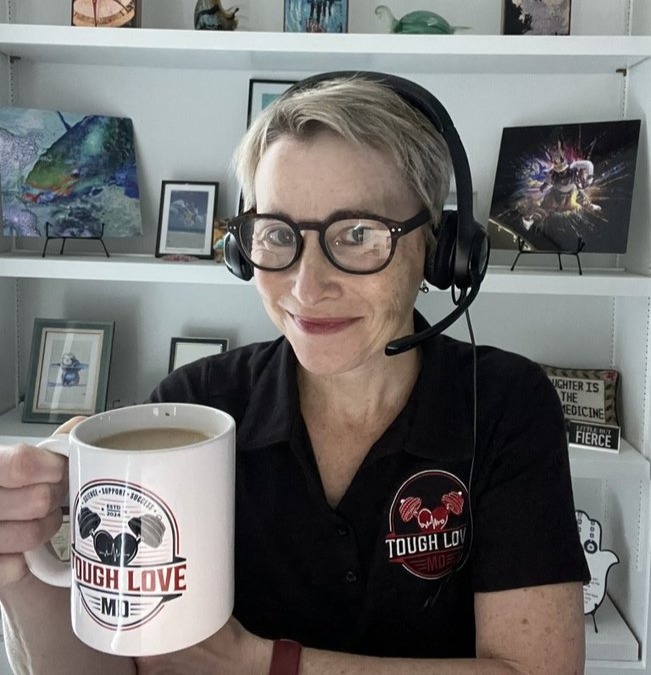
The Book That’s Changing How People Think About Leadership And Life.
Dr. Amy Gutman draws on a lifetime of experience at the frontlines of global prehospital care, emergency medicine, critical care, clinical research, and executive boardrooms to deliver unforgettable lessons in resilience, conflict resolution, and leadership under pressure. This is not another self-help book; it is a field manual for living with clarity, courage, and purpose. Through real stories so extraordinary, they could only be true, Dr. Gutman reveals practical strategies that empower every reader, no matter where they are in life or leadership, to master the art of resilience and unlock their own powerhouse potential.
Choose Your Preference

Signature Talks
Keynotes, Seminars, Corporate Retreats
Executive Physical & Mental Coaching
Dr Amy Gutman MD, FACEP
Using metabolic science to fuel resilience, prevent burnout, and optimize decision-making in high-stakes environments. We equip organizations to turn wellness into a measurable advantage for performance, retention, and ROI.
Learn evidence-based techniques to build mental and physical resilience for personal and professional success.
Empower your team with practical tools to optimize health, reduce burnout, and boost performance.
Engaging insights on emergency care, resuscitation, and occupational health for medical professionals.
Recent Blog


Watch the Official Trailer
A Glimpse Into the Story That Inspired Thousands
Get a glimpse into the journey that inspired it all. This powerful short trailer captures the heart, purpose, and passion behind the story — an experience you won’t want to miss.

You Bought The Book -
Now Listen To The TEDx!

HOW PATIENT SATISFACTION SCORES AFFECT HEALTHCARE | AMY GUTMAN MD, FACEP | TEDXEUSTIS
So controversial it was given a TEDx trigger warning, Dr. Amy Gutman pulls back the curtain on patient satisfaction, chronic illness, and the dangerous cost of avoiding the truth in modern medicine.
Media coverage
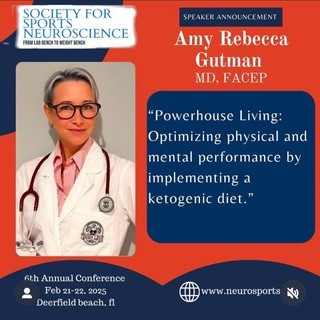
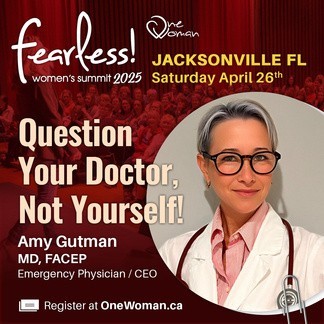
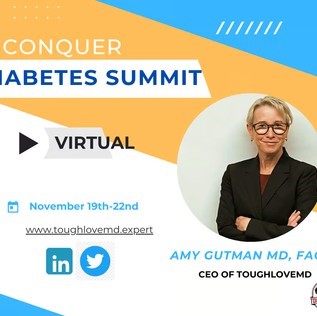










Headshots
These photos are approved for promoting Dr. Amy Gutman
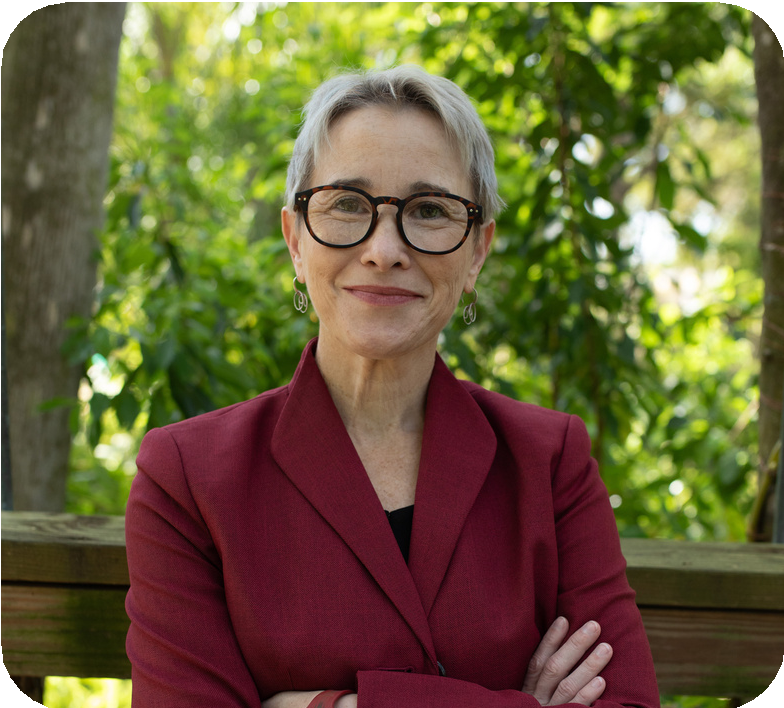
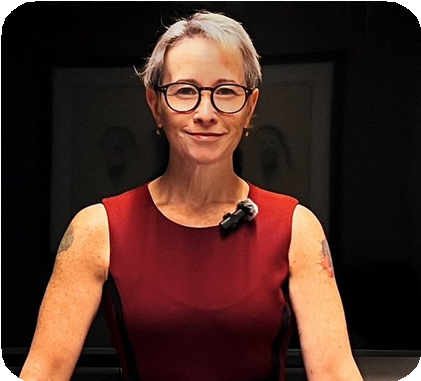
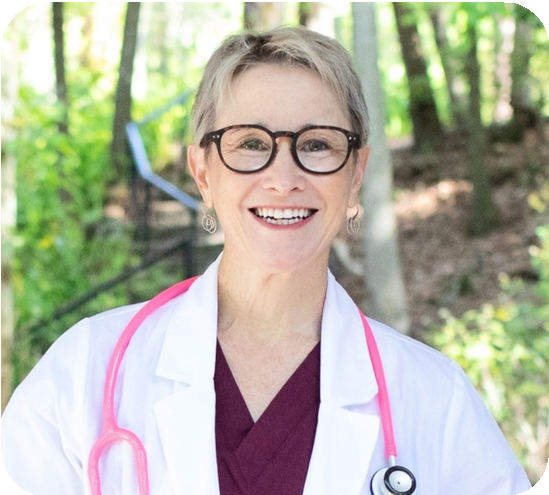
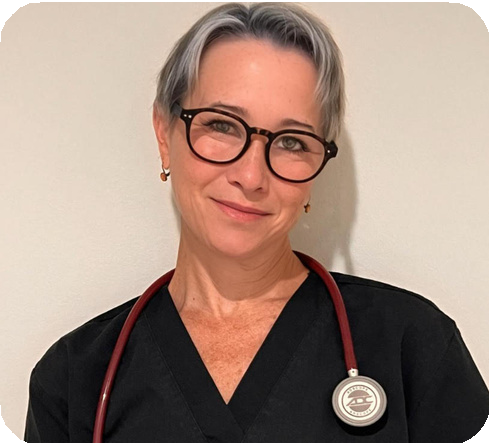

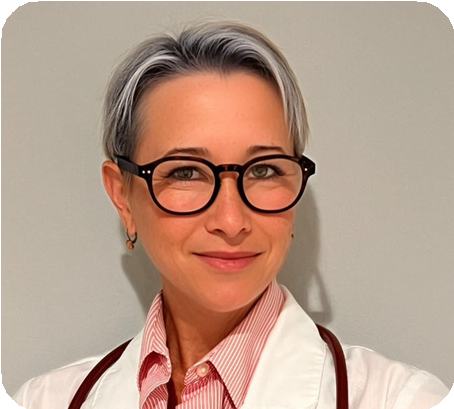
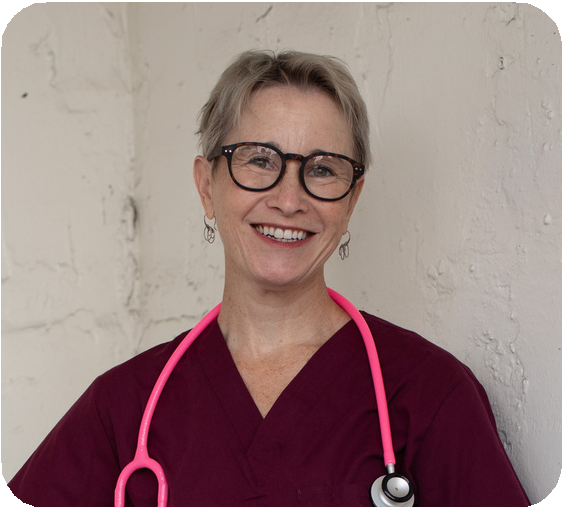
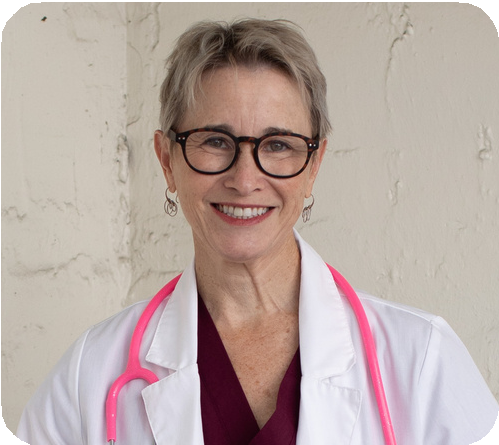
To download photos & bio sheet

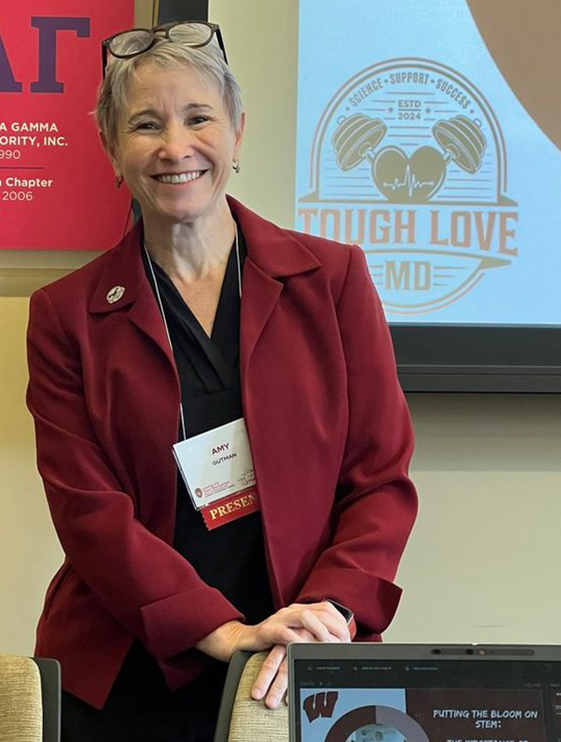
DR. AMY GUTMAN MD, FACEP
Executive Corporate Trainer & Keynote Speaker
Dr. Amy Gutman, MD, FACEP is a board-certified Emergency Medicine physician with over 30 years of experience in clinical practice, research, and corporate consulting. She is the founder and CEO of ToughLoveMD, a private practice dedicated to advancing physical and mental well-being through evidence- based strategies.
A seasoned corporate trainer and keynote speaker, Dr. Gutman specializes in leadership, resilience, and performance optimization. Her upcoming book, “Powerhouse Living: Lead Your Life Like a Resuscitation,” reflects her mission to equip individuals and organizations with the tools to thrive in high-pressure environments and lead with purpose.
Corporations don’t just bring in Dr. Amy Gutman for inspiration; they bring her in for transformation. An ER physician, metabolic health strategist, and global high-impact speaker, she electrifies audiences with the biology of resilience and the neuroscience of elite performance decoded at the cellular level. When your teams need science-backed strategies to lead through chaos, recover like pros, and perform without burning out, Amy delivers the metabolic edge that actually moves the needle.
UNLOCK RESILIENCE, ELEVATE WELLNESS. BOOK DR. AMY GUTMAN
For Bookings
Please contact Dr. Amy’s Engagement Manager working in tandem with her Agent
DR. AMY GUTMAN MD, FACEP
Executive Corporate Trainer & Keynote Speaker
Dr. Amy Gutman, MD, FACEP is a board-certified Emergency Medicine physician with over 30 years of experience in clinical practice, research, and corporate consulting. She is the founder and CEO of ToughLoveMD, a private practice dedicated to advancing physical and mental well-being through evidence-based strategies.
Let’s connect
A seasoned corporate trainer and keynote speaker, Dr. Gutman specializes in leadership, resilience, and performance optimization. Her upcoming book, “Powerhouse Living: Lead Your Life Like a Resuscitation,” reflects her mission to equip individuals and organizations with the tools to thrive in high-pressure environments and lead with purpose.
Corporations don’t just bring in Dr. Amy Gutman for inspiration; they bring her in for transformation. An ER physician, metabolic health strategist, and global high-impact speaker, she electrifies audiences with the biology of resilience and the neuroscience of elite performance decoded at the cellular level. When your teams need science-backed strategies to lead through chaos, recover like pros, and perform without burning out, Amy delivers the metabolic edge that actually moves the needle.